
| Key points | Details to remember |
|---|---|
| 🚀 Release | Progressive deployment schedule depending on regions and platforms |
| 💶 Price | Pricing models by usage: subscription, API credits and enterprise offers |
| 🌐 Availability | Access public, restricted beta and partner integrations |
| ✨ New features | Improvements in understanding, multimodality and security |
| 🛠️ Compatibility | Simple migration from GPT‑4 and conversion tools |
GPT‑5 marks a new stage in the evolution of large language models. A noticeable gain in contextual understanding, more robust multimodal capabilities, and redesigned integration options for businesses are expected. This guide aims to unravel the release schedule, pricing ranges, how to access the service and — above all — what really changes for users and developers. Rather than sticking to marketing announcements, I describe here what you can concretely expect and how to prepare.
Somaire
When is GPT‑5 released? Schedule and deployment
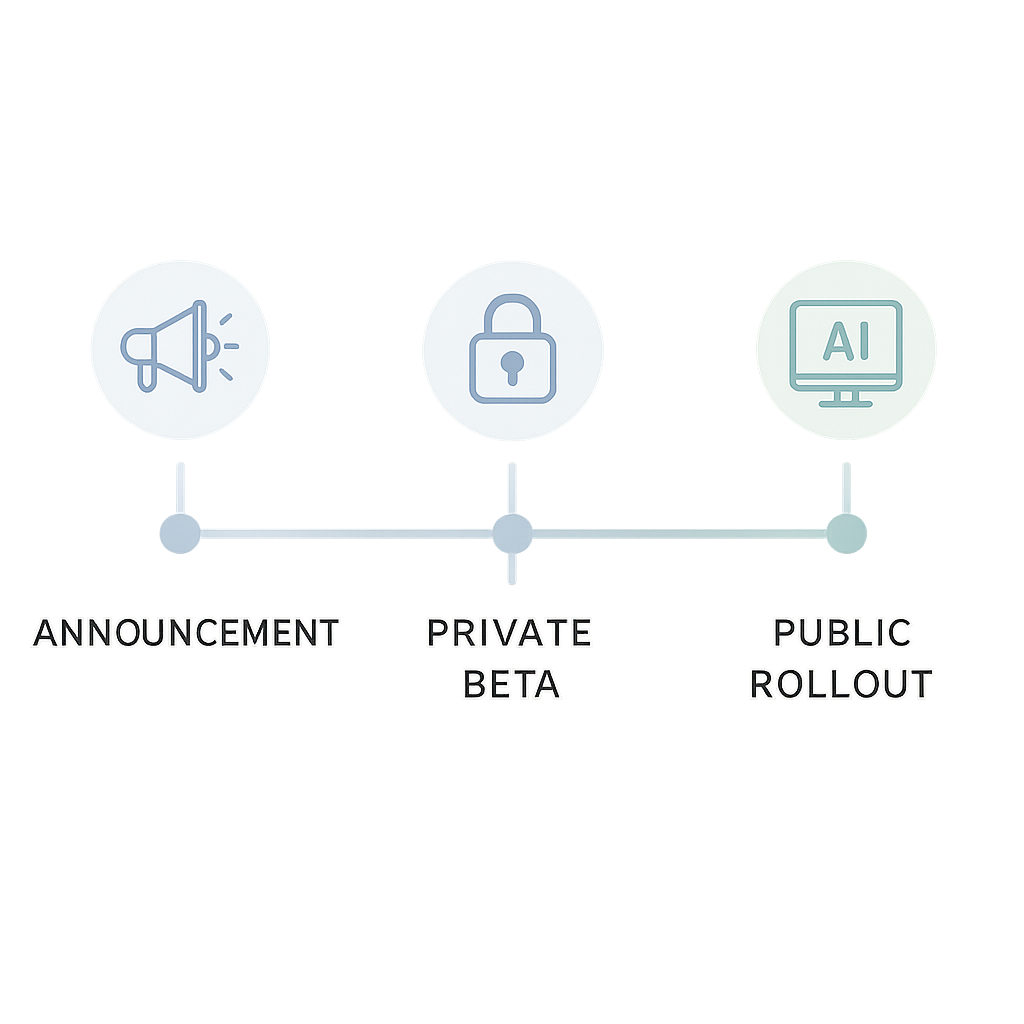
Talking about a “release date” for a model like GPT‑5 sometimes means confusing an initial announcement, a commercial availability, and a global rollout. Launches generally take place in three stages: official announcement, closed beta access (for partners and strategic clients), then progressive public opening. This strategy reduces operational risks and allows quick correction of biases or security issues detected in production.
Typical launch phases
- Announcement: presentation of key capabilities and planned availability.
- Private beta: intensive testing with partners, targeted user feedback.
- Progressive public access: first via API and cloud offers, then via consumer product interfaces.
For a product manager or developer, the important information is the operational window: ensuring a test plan, preparing use cases, and anticipating costs related to trials during the beta period, often billed differently.
What is the price of GPT‑5? Explained pricing models
Pricing methods reflect three realities: the cost of training and inference, the added value for the user, and the willingness of providers to encourage certain uses. Commonly found are offers combining subscription (for SaaS products), pay-as-you-go pricing (API credits), and enterprise packages (SLA, support, private deployment).
Pay-as-you-go pricing vs subscription
| Type | What it is for | Advantage |
|---|---|---|
| Subscription | End users and SaaS applications | Budget predictability, access to premium features |
| API Credits | Developers and variable integrations | Fine scale, payments proportional to usage |
| Enterprise Offers | Private deployment, compliance, dedicated support | SLA, data management, training |
Concretely, for professional use, one must model their traffic and requests. A more powerful model consumes more resources; even if software optimization reduces the cost per request, companies must plan a budget ceiling and safeguards to avoid unexpected expenses.
Availability: who can access it and how?
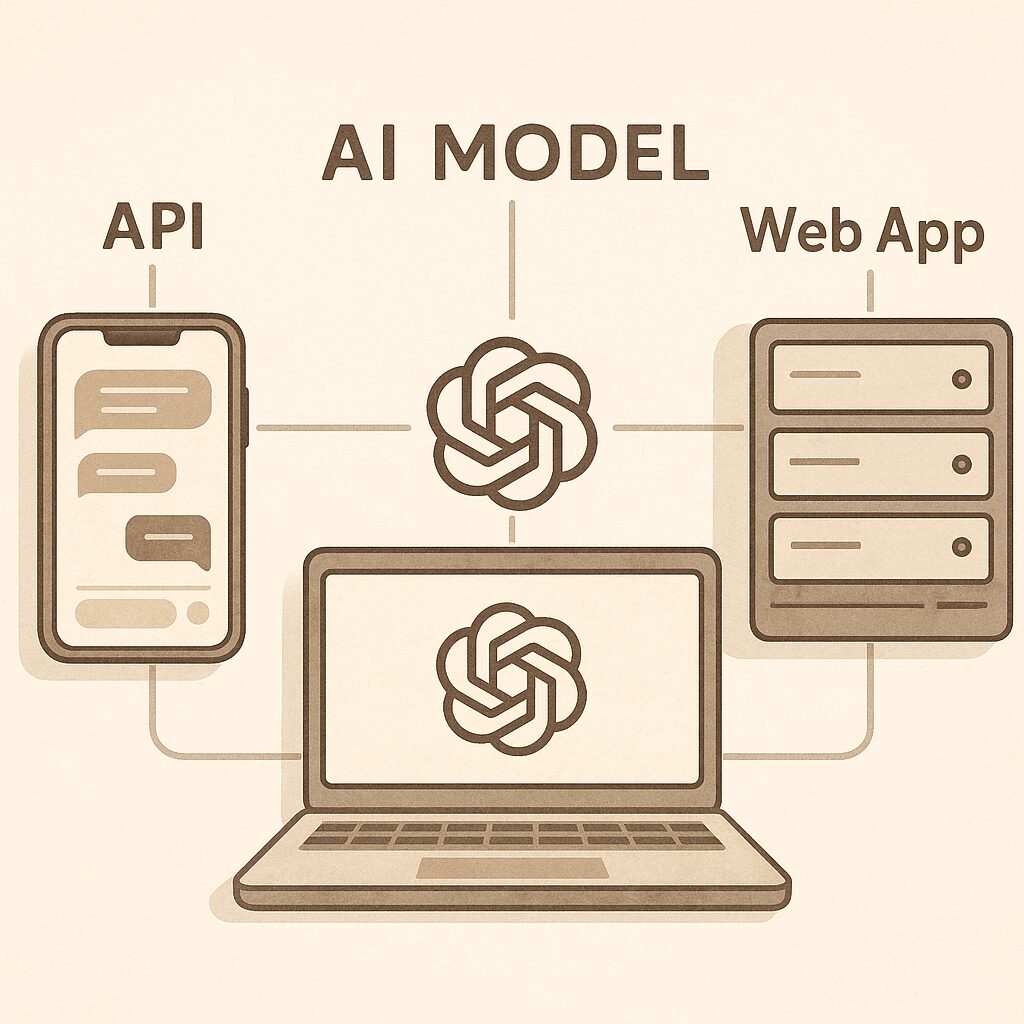
Access to GPT-5 is organized around three channels: public interfaces (applications), APIs for developers, and cloud/private offers for enterprises. Each channel imposes different constraints in terms of latency, confidentiality, and regulatory compliance.
Developer Access
- API keys with quotas and pricing limits.
- Updated SDKs to facilitate migration from GPT-4.
- Support programs for critical integrations (SLA, scaling).
If you plan to integrate GPT-5 into a product, start by testing in a sandbox environment, measure latency and consumption, then plan a gradual rollout. Companies wishing to keep data internally can opt for private deployment or a “bring-your-own-infrastructure” depending on the commercial offer.
New features and improvements: what really changes
The announced new features for GPT-5 touch several areas: contextual understanding, multimodal capabilities, robustness against hallucinations, and even better, more advanced control and auditability tools. Rather than repeating slogans, here is what these developments imply in practical terms.
Understanding and long-term memory
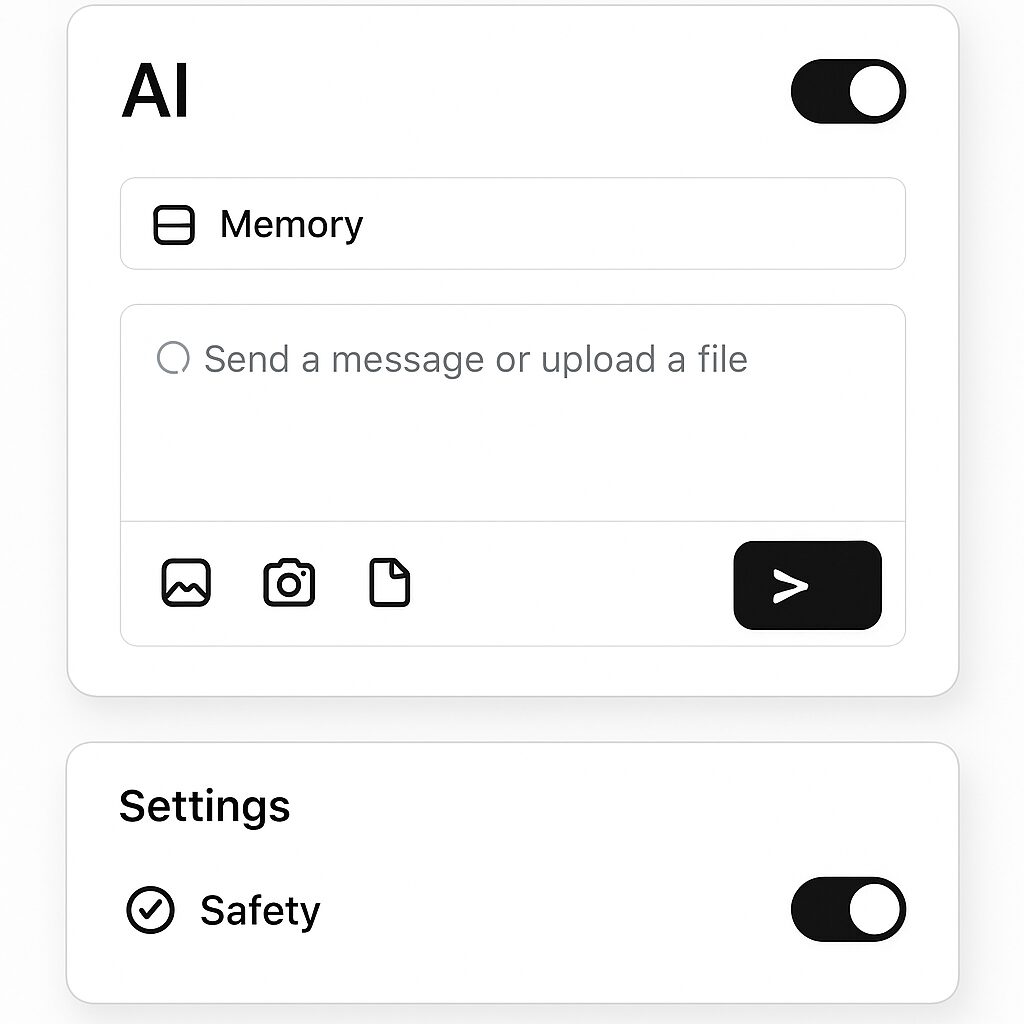
GPT-5 improves context management over long conversations and has mechanisms to “remember” relevant elements throughout a session. For the end user, this results in less repetitive interactions and better personalization. For the enterprise, this means storing context vectors or activating controllable “memory” primitives.
Advanced multimodality
The integration of images, sounds, or other formats becomes smoother: the model understands complex images, reacts to audio snippets, and can combine these inputs to produce richer outputs. Concretely, we move from a simple “text + image” to scenarios where the model synthesizes multiple media for a coherent response.
Security, filtering, and audit
Security mechanisms are being strengthened: bias control, decision traceability, and options to limit certain types of responses. Organizations concerned with compliance will benefit from audit tools that allow tracing which data influenced a response — essential in regulated sectors.
Quick Comparison: GPT‑4 vs GPT‑5
A summary table helps grasp the evolution without delving into technical training figures.
| Aspect | GPT‑4 | GPT‑5 |
|---|---|---|
| Context Understanding | Good on short conversations | Better on long sessions, more stable memory |
| Multimodality | Basic to intermediate | Richer and multi-input integration |
| Security | Filtering and moderation | Fine controls and increased auditability |
| Inference Cost | Moderate | Potentially higher, but optimized |
Limits and Points of Attention
No model is perfect. GPT‑5 reduces some errors but remains sensitive to biases present in training data and can generate plausible but incorrect responses. Critical uses (medical, legal, financial) therefore require a human verification framework and contractual guarantees.
- Human validation indispensable for sensitive decisions.
- Cost monitoring: usage analyses and budget alerts.
- Confidentiality: choice of private deployment if necessary.
How to Prepare: Practical Checklist
Preparing means both technical and organizational: testing, training teams, and planning safeguards. Here is an operational checklist for product and IT teams.
- Evaluate priority use cases and measure expected benefits.
- Simulate costs with estimates of requests and prompt lengths.
- Set up a human review protocol for sensitive responses.
- Verify compliance requirements and choose the appropriate hosting option.
- Train teams on new features (memory, multimodality, controls).
FAQ
When will I be able to use GPT‑5 for my application?
As soon as the API is publicly opened, but start with the beta if you want early access and to influence model behaviors through your feedback. Plan load testing before production deployment.
Will costs be prohibitive for small teams?
Small projects can remain affordable by optimizing prompts, limiting costly calls, and using less powerful models for non-critical tasks. The cost/benefit ratio will strongly depend on the productivity gain provided.
Should applications built on GPT‑4 be recalibrated?
Yes: although migration is often facilitated, performance and behaviors change. Test existing workflows, adapt prompts, and revise automated tests to account for new capabilities.
Is GPT‑5 safer than its predecessors?
Security improvements are present, notably in auditing and control. This does not replace a human governance strategy but reduces operational risks if options are properly configured.
Conclusion — key takeaways
GPT‑5 represents a significant technical advancement, especially for those focusing on customization, multimodality, and interaction robustness. Its adoption nevertheless requires preparation: assessing costs, adjusting validation processes, and integrating audit tools. In short, the promise is real, but scaling up demands method. If you are working on product use cases, start testing now to avoid facing the transition later.
{
“@context”: “https://schema.org”,
“@type”: “WebPage”,
“about”: {
“@type”: “Thing”,
“name”: “GPT-5: release, price, and new features”
},
“keywords”: [“GPT-5”, “release date”, “price”, “availability”, “new features”]
}