
Proxyium’s rotating proxy automatically changes the IP address with each request, ensuring smooth and unblocked scraping. In a few simple steps, you will be ready to collect data discreetly and optimize the speed of your requests.
🌐 Rotating proxy: it regularly switches your IP address to avoid blocks and reduce the risk of bans.
🔒 Anonymity: each request comes from a different IP, making your activity undetectable by target sites.
⚙️ Quick setup: with a few Python commands and your Proxyium credentials, you are ready to scrape efficiently.
Somaire
Why choose a rotating proxy for web scraping?
Key takeaway: A rotating proxy keeps your session anonymous and distributes your requests across multiple IPs, thus avoiding blocks and limitations.
When scraping a large volume of pages, target servers can detect and block an IP making an excessive number of requests. The rotating proxy changes IP with each connection, simulating multiple distinct users. This strategy smooths data extraction and minimizes interruptions.
Definition of a rotating proxy
A rotating proxy is a service that provides a pool of IP addresses. With each request, the IP used is drawn from this pool automatically. Unlike a static proxy where the address remains the same, the rotating proxy distributes the load across multiple access points.
Key advantages
- Block evasion: changing IP limits the risk of bans.
- Scalability: you can increase the number of requests without overloading a single IP.
- Geographical distribution: some services offer IPs in different countries, useful for bypassing geographic restrictions.
Introduction to Proxyium
Key takeaway: Proxyium offers a premium rotating proxy service, easy to integrate thanks to a REST API and open-source libraries.
Proxyium positions itself as a turnkey solution for intensive scraping. With over 10 million IPs hosted, worldwide coverage, and clear documentation, it meets the needs of demanding developers. The APIs integrate in a few lines of code into your Python, Node.js, or PHP scripts.
Step-by-step setup of a rotating proxy with Proxyium
Key takeaway: Create your account, retrieve your credentials, install the library, and test your setup in under 10 minutes.
1. Creating your Proxyium account
Go to the Proxyium website and sign up with a valid email address. The free plan allows you to test the service, but for intensive use, choose a plan suited to your major volume. Your credentials will be sent to you instantly by email.
2. Obtaining your API credentials
In the Proxyium dashboard, go to the API Keys section and generate a new key. Carefully note your API Key and Secret. You will use them to authenticate each request via HTTP headers.
3. Installing dependencies
In your development environment, install the official Proxyium library for Python:
pip install proxyiumYou can also opt for integration via pure HTTP or with another language (Node.js, PHP). For Python, the library automatically handles rotation and timeouts.
4. Integration into your scraping script
Insert this block at the beginning of your code to configure the rotating proxy:
from proxyium import ProxyManager

# Initialization
manager = ProxyManager(api_key="YOUR_API_KEY", api_secret="YOUR_SECRET")

# Example HTTP request
response = manager.get("https://example.com/data")
print(response.text)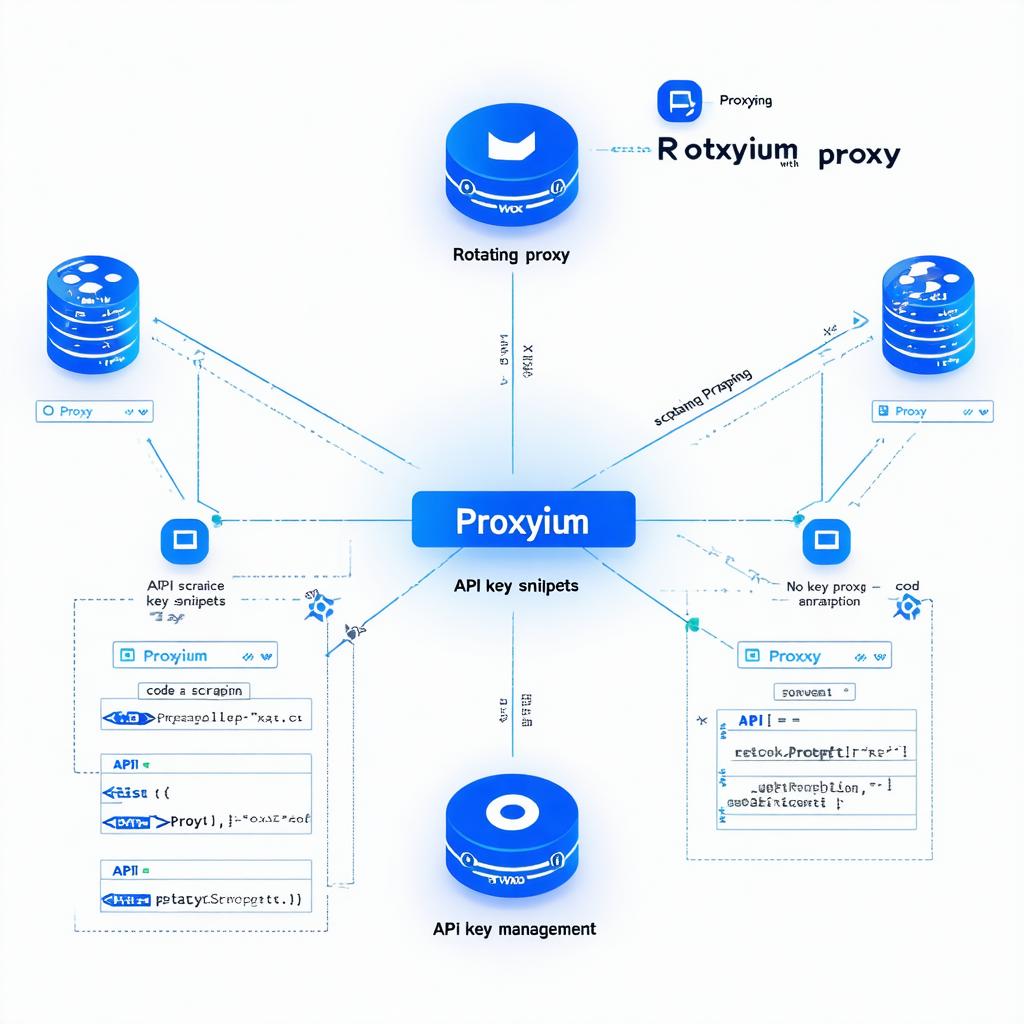
Each call to manager.get() uses a new IP. You can adjust the timeout or retries parameters in ProxyManager to optimize reliability.
5. Testing and verification
To verify that rotation works, query a service like https://httpbin.org/ip multiple times:
for _ in range(5):
    print(manager.get("https://httpbin.org/ip").json())
You should get different IP addresses on each run, confirming automatic rotation.
Best practices and tips
- Limit request rate: even with a proxy, maintain a reasonable pace to avoid overloading servers.
- Handle errors: implement retry logic on 429 or 5xx status codes.
- Clean up sessions: properly close your connections to free Proxyium resources.
- Monitor logs: analyze response times and errors to adjust your settings.
- Change pool if targeting specific regions or to isolate certain scraping tasks.
FAQ
What is a rotating proxy?
A rotating proxy provides a pool of IP addresses and assigns a different IP to each request to bypass blocks.
Why use Proxyium for scraping?
Proxyium offers a large number of IPs, global coverage, and a simple API to automate rotation.
How do I get my Proxyium API credentials?
From your Proxyium dashboard, generate a new key in the “API Keys” section and keep the key and secret.
What code should I use to integrate a rotating proxy?
In Python, install the library with pip install proxyium, then create a ProxyManager with your key to send your requests.
How do I test the rotating proxy configuration?
Query https://httpbin.org/ip multiple times and check that the returned IP addresses differ on each call.
What best practices should I follow for scraping with Proxyium?
Set a moderate request rate, handle HTTP errors, and monitor logs to adjust your timeouts and retries.