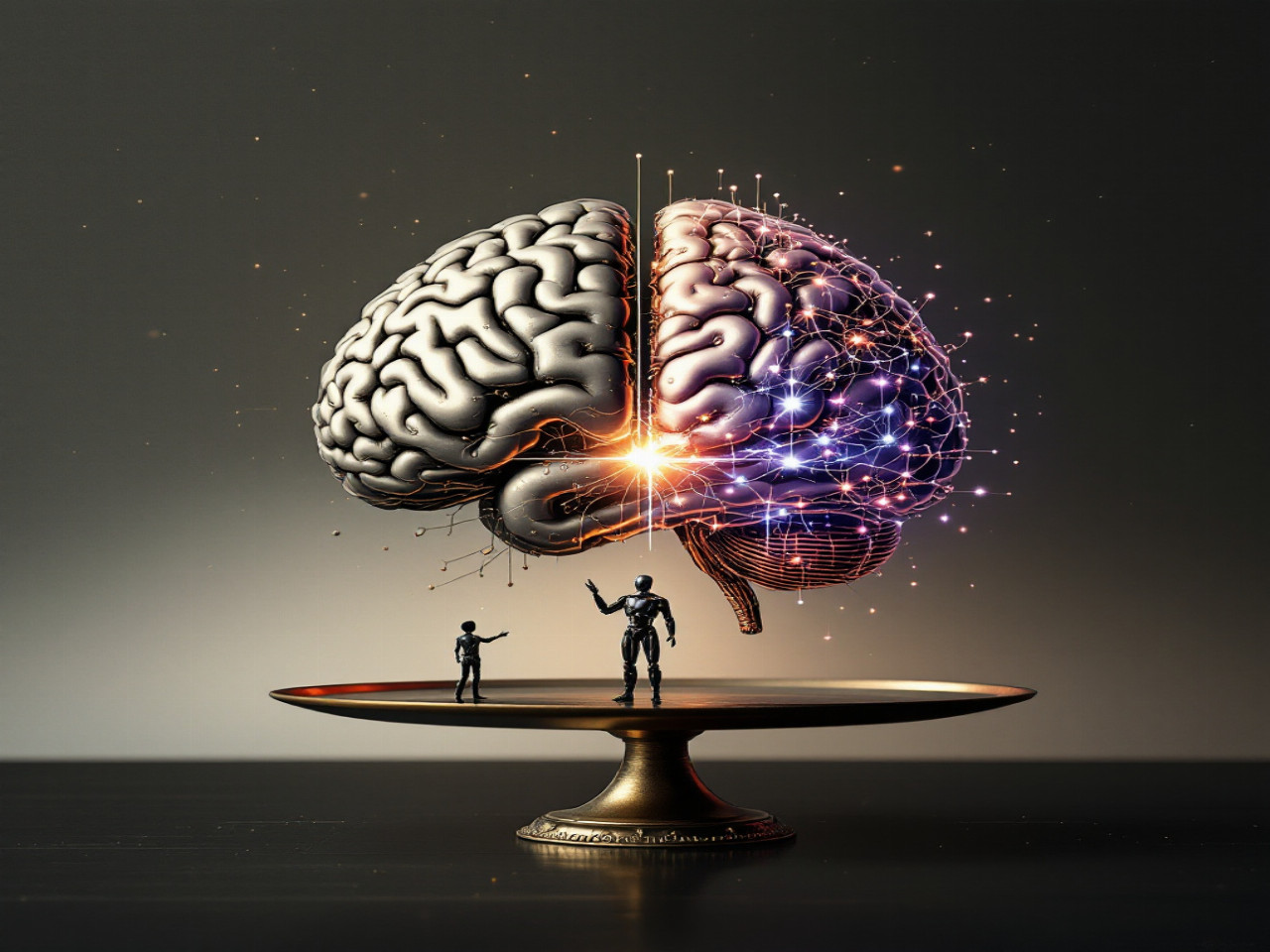
Artificial intelligence is booming, from movie recommendations to predictive health analysis. Yet, beneath its technological veneer lie major ethical issues that deserve attention. Between surveillance, insidious discrimination, and threats to human autonomy, this Q&A offers an overview of the main risks and suggests ways to navigate these sometimes murky waters.
Somaire
Privacy and Surveillance
Massive Data Collection
It is hard to imagine the scale of data collection carried out by some AI systems. Every online interaction, every voice query, or movement captured by camera feeds models that, without transparency, can reconstruct your complete profile. In the field of voice research, for example, optimizing the recognition of your commands involves recording thousands of audio samples. The practical guide to optimizing voice search with AI highlights the effectiveness of these systems but also raises the question of storing this sensitive data.
Misuse and Mass Surveillance
Beyond the web giants, states exploit AI for video surveillance and social control. Facial recognition, presented as a security tool, enters public spaces without real consent. When every face becomes exploitable data, the line between security and intrusion blurs. This shift raises the question of safeguards: who guarantees that a smart camera does not turn into a tool of repression?
Bias and Discrimination
Historical Data and Stereotypes
Algorithms learn based on historical data, where stereotypes are often embedded. If a digital recruitment system has been fed CVs favoring a certain profile, it will reproduce this pattern, burying applications that deviate from the mold. Biases can relate to gender, origin, or age, without the user being aware. A simple keyword, misinterpreted, can be enough to exclude a qualified profile.
Concrete Examples in Recruitment
Several companies had to suspend AI projects after noticing wage gaps widened by their own algorithms. In a study cited by the NGO Tech for Good, a CV analysis system systematically penalized women from certain fields. As evidence, the figures show a 30% reduction in female applications retained, without reflecting a real drop in competence. These incidents remind us that “you cannot fix what you do not measure,” as researcher Timnit Gebru points out.
Transparency and Responsibility
The Algorithmic Black Box
Often, it is impossible to trace the internal workings of an AI model. The best performances come from deep neural networks whose decisions are incomprehensible, even to their creators. This lack of readability poses a responsibility problem: how to challenge a decision if the criteria used are unknown?
Traceability of Decisions
To lift this veil, several initiatives propose annotating data processing steps: origin, technical characteristics, model version. Automatic audit tools are emerging and can generate a “logbook” for each decision. The table below summarizes some possible practices.
| Practice | Description | Advantage |
|---|---|---|
| Open Documentation | Publication of datasets and algorithms | Encourages external review |
| Third-party Audit | Independent evaluation by experts | Strengthens user trust |
| Version Traceability | History of model updates | Allows isolating the source of a malfunction |
Human autonomy and manipulation
Influence of opinions
Whether in targeted advertising or content recommendations, AI refines its proposal to capture your attention. By repeatedly offering you information tailored to your psychological profile, it can shape your opinions without transparency. Beyond personalized echo chambers, we often find ourselves trapped in a “filter bubble.”
Deepfakes and credibility
Deepfakes represent an unprecedented risk: hyper-realistic videos where a person says or does what they never actually did. Imagine a political scene or a celebrity implicated by a doctored video. Technologies to detect these falsifications are advancing, but the tug-of-war between deepfake creators and detectors remains tense.
“Deepfakes raise the question of trust in any visual content. Soon, we will have to ask whether a simple selfie is authentic.” — Dr. Alice Martin, digital security researcher
Socio-economic impacts
Jobs at risk
Automation sometimes means job cuts. Low value-added jobs, as well as routine intellectual tasks, are delegated to machines. OECD figures predict that 14% of jobs could be automated within ten years. In this context, retraining and continuous education become urgent.
Access inequalities
Countries with technical and financial resources benefit more from AI, widening the gap with emerging economies. The digital divide is accompanied by an algorithmic divide: who controls the models? Who can afford massive cloud computing? Without regulation, technologies concentrate among a few players, risking marginalizing those without access.
Governance, regulation, and best practices
International standards
Several organizations, including UNESCO and the European Union, are working on ethical standards. GDPR laid the first stone of the “right to explanation,” while the proposed European AI Act aims to classify systems according to their risk level. These texts spark passionate debates about their scope and practical applicability.
Ethics audits and training
Regularly auditing algorithms becomes a good habit to anticipate abuses. Internal labs or specialized firms can identify biases and propose fixes. Moreover, training technical and decision-making teams in digital ethics establishes a culture of responsibility rather than automatic compliance.
FAQ
What are the main areas affected by AI ethical risks?
The health, recruitment, justice, and government surveillance sectors are particularly concerned. Each of these fields combines privacy issues, biases, and potential discrimination.
How to limit algorithmic biases?
Increasing external audits, transparency on datasets, establishing ethics committees, and using de-biasing techniques are all ways to reduce biases.
Are existing regulations sufficient?
While GDPR provides rights to European citizens, it still lacks precise guidelines for AI systems. The AI Act currently under discussion in Brussels should fill some gaps.
How to detect a deepfake?
Tools analyzing metadata and visual anomalies are in development. Some university labs offer browser plugins allowing quick checks.
{ “@context”: “https://schema.org”, “@type”: “FAQPage”, “mainEntity”: [ { “@type”: “Question”, “name”: “What are the main areas affected by the ethical risks of AI?”, “acceptedAnswer”: { “@type”: “Answer”, “text”: “The health, recruitment, justice, and government surveillance sectors are particularly concerned. Each of these areas combines issues of privacy, bias, and potential discrimination.” } }, { “@type”: “Question”, “name”: “How to limit algorithmic biases?”, “acceptedAnswer”: { “@type”: “Answer”, “text”: “Increasing external audits, transparency on datasets, setting up ethics committees, and using debiasing techniques are all ways to reduce biases.” } }, { “@type”: “Question”, “name”: “Are existing regulations sufficient?”, “acceptedAnswer”: { “@type”: “Answer”, “text”: “While the GDPR provides rights to European citizens, it still lacks precise guidelines for AI systems. The AI Act currently under discussion in Brussels should fill some gaps.” } }, { “@type”: “Question”, “name”: “How to detect a deepfake?”, “acceptedAnswer”: { “@type”: “Answer”, “text”: “Tools analyzing metadata and visual anomalies are in development. Some university labs offer browser plugins for quick checks.” } } ] }
{ “@context”: “https://schema.org”, “@type”: “WebPage”, “about”: { “@type”: “Thing”, “name”: “ethical risks of artificial intelligence” }, “keywords”: [“artificial intelligence”, “privacy”, “bias”, “deepfakes”, “regulation”] }