Somaire
Scientific Context and Current Events
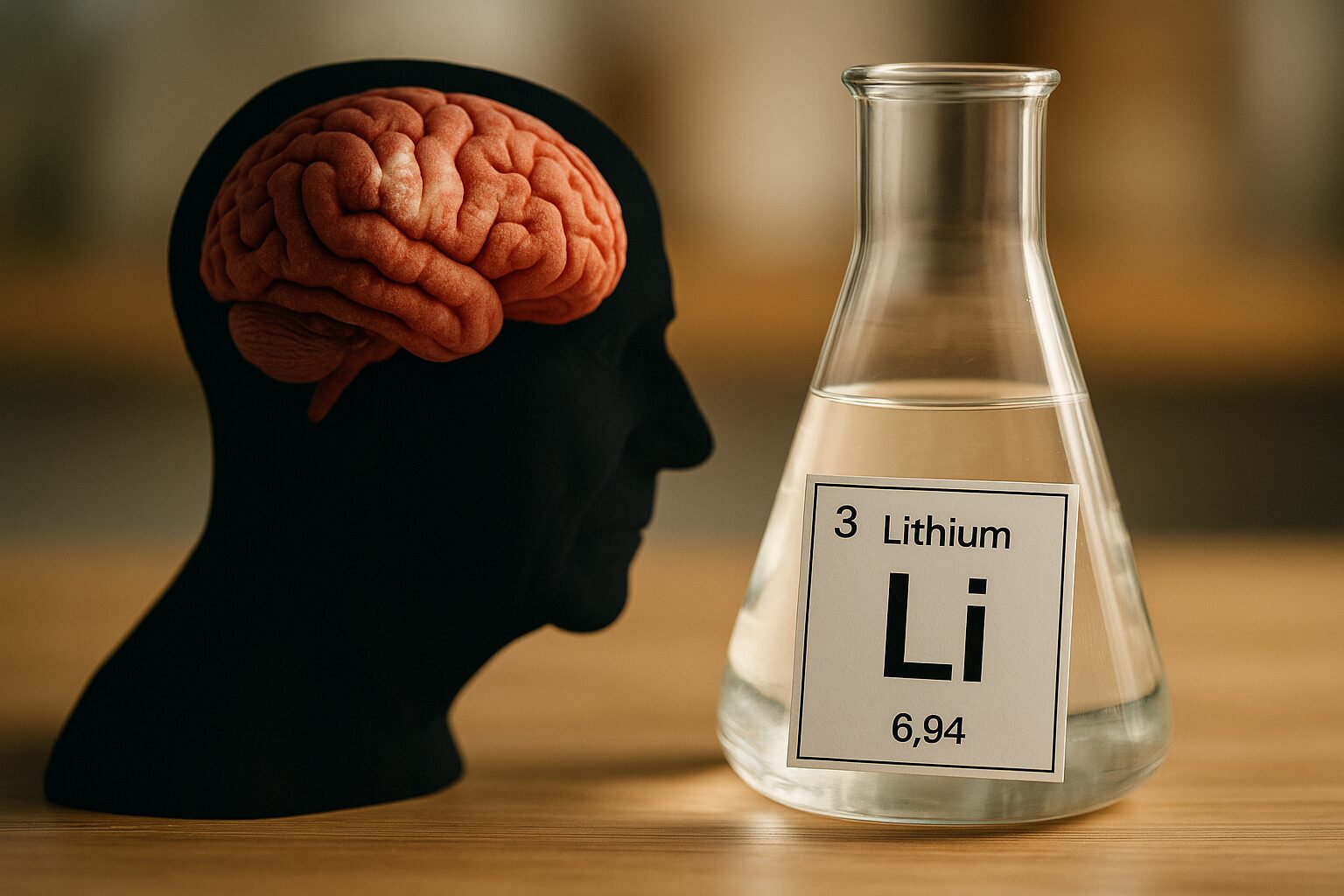
For several decades, research on Alzheimer’s disease (AD) has focused on eliminating amyloid plaques and reducing neurofibrillary tangles of tau protein. Yet, despite billions invested and hundreds of clinical trials, few treatments have proven truly effective. In August 2025, a study coordinated by Bruce Yankner’s team (Harvard Medical School) and published in Nature opened a new avenue: the role of lithium, a trace element until now mainly known for its use in psychiatry, could be central in the pathophysiology of Alzheimer’s.
This discovery is based on an observation: among 27 metals measured in human brain tissues, lithium is the only one whose concentration decreases significantly from the early stages of cognitive decline, well before severe clinical manifestations. Even more surprisingly, this decrease appears to be worsened by a phenomenon of sequestration in amyloid plaques, reducing the biologically active fraction available to neurons.
The 2025 Nature/Harvard Study: Methods and Results
The team analyzed post-mortem samples of prefrontal cortex from three groups: cognitively normal subjects, patients with mild cognitive impairment (MCI), and confirmed Alzheimer’s patients. Elemental measurements revealed a clear drop in lithium as early as the MCI stage, with no notable changes in other regions such as the cerebellum, supporting a targeted process rather than a global loss.
To understand causality, researchers used genetically programmed mouse models to develop amyloid and tau lesions. Mice subjected to a lithium-deficient diet (~50% reduction) developed the full Alzheimer-like profile: amyloid-β accumulation, tau hyperphosphorylation, pro-inflammatory microglial activation, synaptic loss, and demyelination. Conversely, administration of low-dose lithium orotate reversed these alterations, even in symptomatic aged animals.
Proposed Biological Mechanisms
Several convergent mechanisms have been identified:
- Amyloid sequestration: lithium binds to amyloid deposits, making it unavailable for its neuroprotective functions.
- Activation of GSK-3β in case of deficiency: this kinase promotes pathological tau phosphorylation and amyloid aggregation.
- Microglial dysfunction: lithium deficiency disrupts the brain’s immune system, reducing the clearance capacity of neuronal debris.
- Demyelination: lithium supports the survival and function of oligodendrocytes; its decrease weakens nerve conduction.
- Transcriptomic alterations: gene expression profiles observed in lithium-deficient mice mimic those of human Alzheimer brains.
Lithium as an Early Biomarker
The fact that lithium decrease is detectable before irreversible lesions opens the way to its use as a predictive biomarker. In theory, a non-invasive measurement (blood test or specialized brain imaging) could identify individuals at risk well before symptom onset. However, no validated routine technique exists to date.
Dietary Intake and Natural Sources
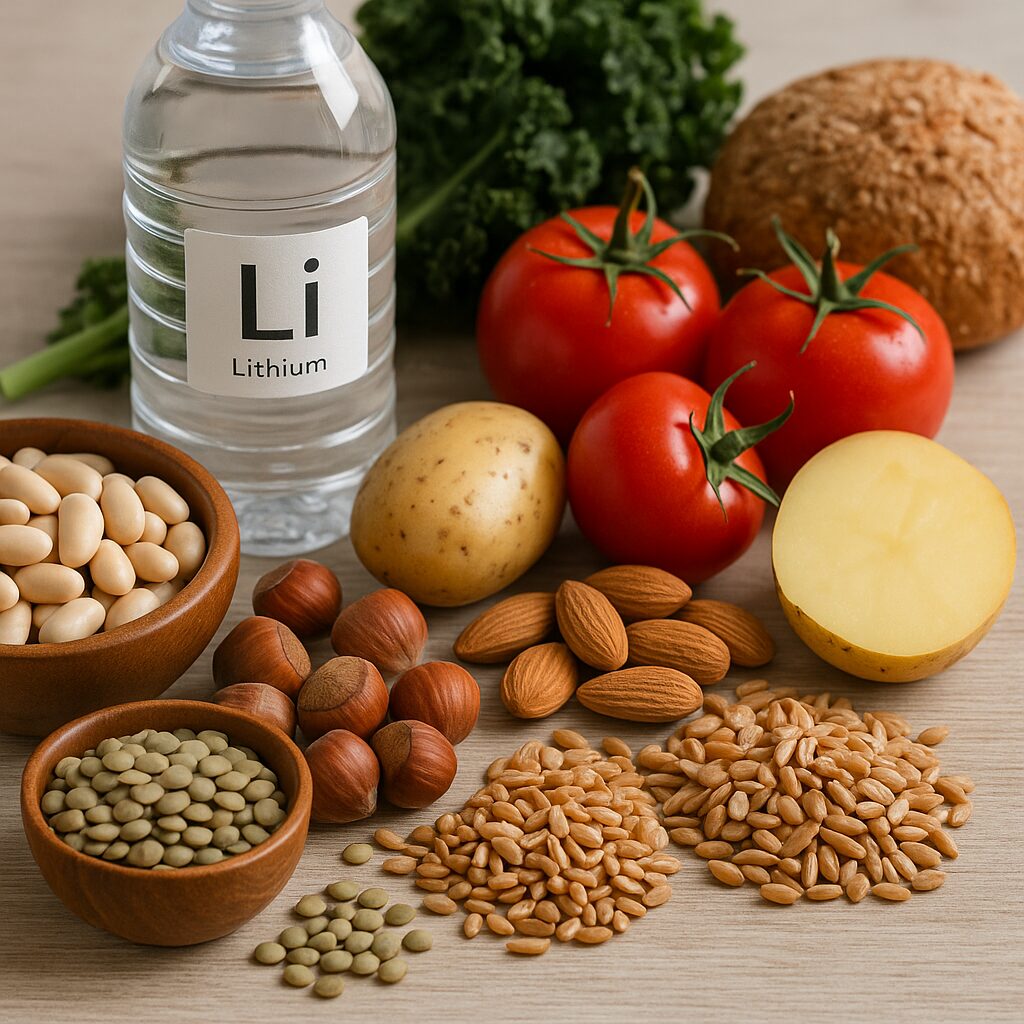
Lithium is present in trace amounts in many foods and in water. The most notable sources include:
- Legumes: peas, beans, lentils, chickpeas.
- Vegetables: potatoes, tomatoes, cabbages.
- Whole grains: wheat, barley, brown rice.
- Nuts and seeds: hazelnuts, sunflower seeds, almonds (modest amounts).
- Seafood: some marine species contain it, depending on the fishing area.
- Mineral waters: concentrations varying from a few µg/L to > 1 mg/L depending on the source.
Daily intake through diet varies greatly geographically. There is no official RDA, but some publications mention an exploratory reference around 1 mg/day for adults. For a detailed overview and magnitude orders by food or water, see our article: Foods rich in lithium: what is known.
Therapeutic perspectives: the case of lithium orotate
Lithium orotate differs from classic forms (carbonate) by its lower affinity for amyloid deposits and its ability to maintain effective brain bioavailability. In the 2025 Nature study, its low-dose administration allowed reversal of pathological markers in mice, with no observed adverse effects. This makes it a serious candidate for early clinical trials.
Research challenges and perspectives
The upcoming challenges for the scientific community are multiple:
- Conduct randomized controlled trials in humans to evaluate the efficacy and safety of lithium orotate in Alzheimer’s disease.
- Develop reliable methods to measure brain lithium in vivo.
- Explore the optimal therapeutic window (prevention vs. treatment of early stages).
- Assess the impact of increased dietary lithium intake on cognitive biomarkers.
Precautions and limitations
Despite the enthusiasm, several points call for caution:
- Positive results mainly come from animal models; they do not guarantee translation to humans.
- Pharmaceutical lithium has a narrow therapeutic margin and can cause serious adverse effects (renal, thyroid, neurological damage).
- Self-supplementation is not recommended outside a medical framework.
Sources and further reading
- Aron L. et al., 2025. Lithium deficiency and the onset of Alzheimer’s disease. Nature.
- Harvard Medical School. “Could Lithium Explain — and Treat — Alzheimer’s Disease?”, 2025.
- JAMA Psychiatry, 2017. “Association of Lithium in Drinking Water With the Incidence of Dementia”.
- PMC reviews (2018, 2024) on dietary lithium content.
This article is informative and does not replace the advice of a healthcare professional.