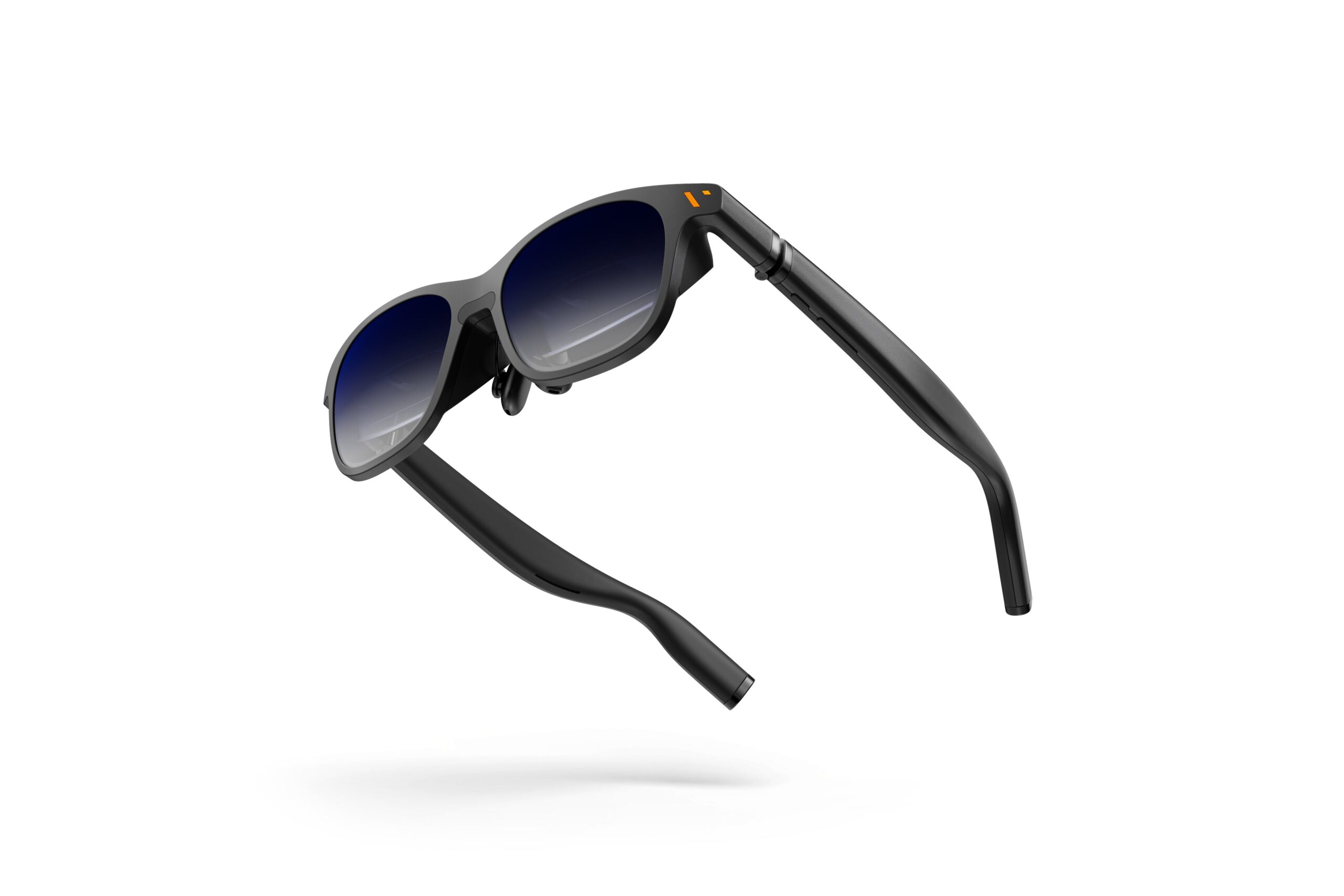
Intro. With the VITURE Pro XR, the brand refines its “screen-glasses” formula: 135″ virtual, micro-OLED 1080p/eye, 120 Hz, peak at 4000 nits (≈1000 nits perceived), FOV 46°, built-in diopter 0 to −5 D, fast electrochromism (0.5–40% transmittance) and 77 g on the scale. Add to that the SpaceWalker app (multi-window, real-time 3D, 3DoF) and an accessory ecosystem (Mobile Dock, Neckband, 8BitDo controller): VITURE targets both mobile gamers and demanding binge-watchers.
Somaire
Why this model matters: a leap in brightness and sharpness (“UltraClarity™”)
Compared to the VITURE One, the Pro XR promises a 15″ larger screen, 120% brighter and doubled refresh rate (120 Hz). The brand announces an UltraClarity™ technology: edge-to-edge sharpness, fine readable text, anti-glare/ghost/motion sickness. The 4000 nits peak (≈1000 nits perceived) guarantees a punchy image even in ambient light. Everything remains SGS A+ certified against visual fatigue.
Design & comfort: 77 g, aerospace metal and adjustable diopter
The chassis uses an aerospace aluminum alloy + titanium hinges for rigidity. The glasses integrate diopter dials 0 to −5 D, an IPD 57.5–69.5 mm, a wear sensor and weigh 77 g. The revised electrochromism blocks up to 99.5% of light in 0.1 s (transmittance 0.5–40%), which avoids adding covers. The video/power cable connects via a Magnetic Pogo Pin to prevent yanking.
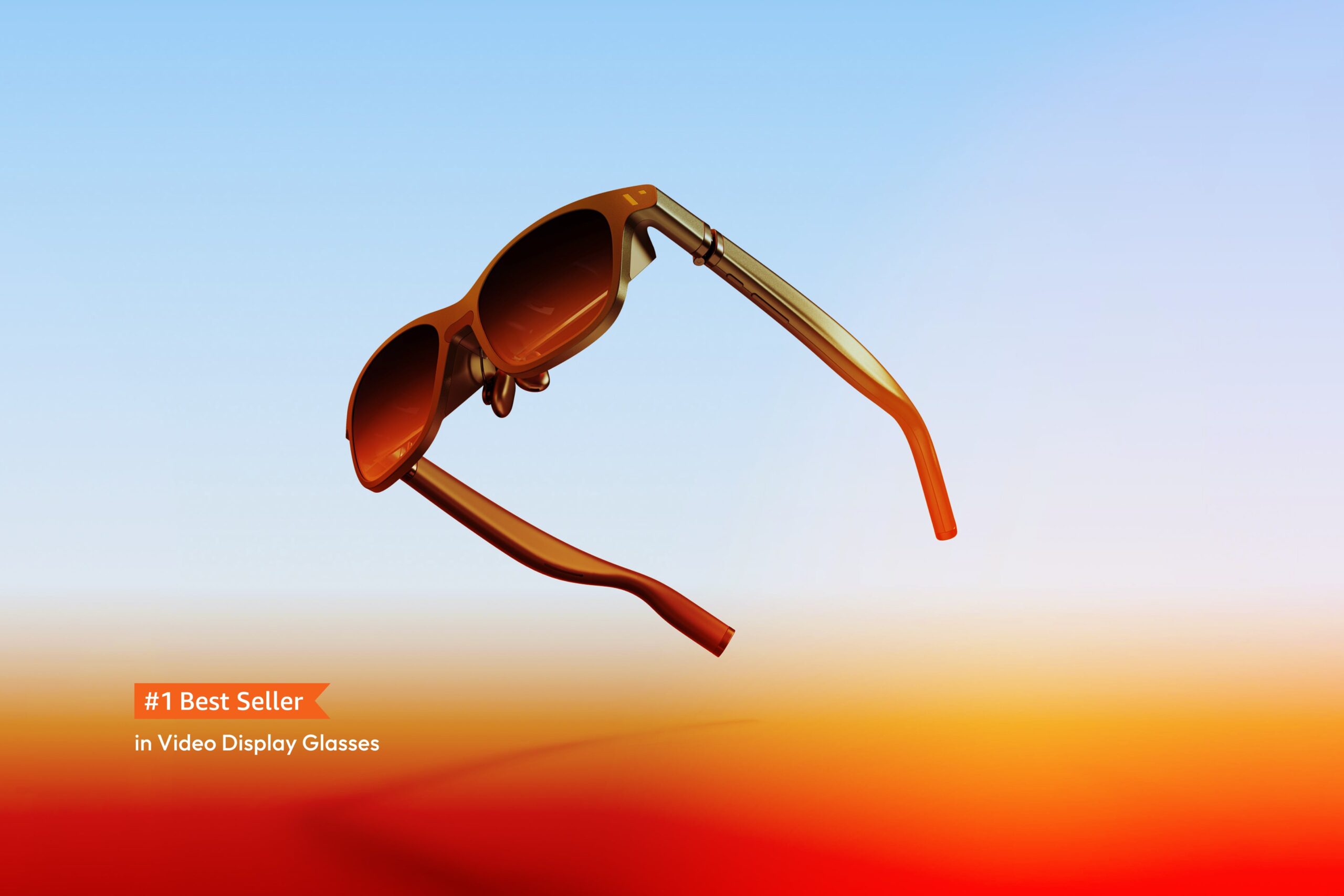
Image & rendering: micro-OLED 1080p, 120 Hz, FOV 46°
The Sony micro-OLED panels deliver 1920×1080 per eye with a 100,000:1 contrast and 108% sRGB. The 46° field of view places VITURE on par with the Xreal Air 2 / Air 2 Pro, slightly behind the Rokid Max 2 (~50°). 9 brightness levels, 4 color modes and the ability to switch to native 3D (3840×1080 SBS) complete the experience. The announced PPD (49) allows reading fine text without fatigue.
Software & features: SpaceWalker, Immersive 3D & 3DoF
SpaceWalker (iOS, Android, macOS, coming soon Windows) offers a multi-window desktop, ultra-wide screens, 3DoF anchoring and especially Immersive 3D, real-time 2D→3D conversion. On PC/Mac, installation is simple; on Android, some limits (DRM/permissions) persist. Firmwares regularly add profiles (e.g., “Film” color scheme) and improvements.
Compatibility & accessories: plug & play and ecosystem
Thanks to USB-C/DP, the Pro XR connects to most smartphones, PC/Mac, Steam Deck/ROG Ally, etc. For the Switch / Switch 2, the Mobile Dock (13,000 mAh, HDMI/USB-C, dual glasses output) is the ideal solution. The Pro Neckband (Android) offers wireless streaming/PS5 Remote Play. An official 8BitDo controller completes the offer for a mobile gaming setup.
Real uses: personal cinema, gaming, second screen
Movies in dark room mode, discreet Netflix, AAA games on Steam Deck, Mario Kart on Switch 2, analytics dashboard during travel: the Pro XR excel in content consumption and mobile gaming. For productivity, multi-screen helps, but the lack of 6DoF and gestures limits “spatial” interaction. Harman audio is clean and not very leaky, but lacks volume: think of headphones in noisy environments.
Comparison & responsive (cards)
Four key models on the market. Here is a clear summary, mobile compatible.
VITURE Pro XR
- Display 1080p/eye – 120 Hz – 4000 nits (1000 perceived)
- FOV 46°
- Weight 77 g
- Vision adjustments Diopter 0 to −5 D, IPD 57.5–69.5 mm
- Transparency Electrochromic 0.5–40%
- Spatialization 3DoF (SpaceWalker)
- Price $409 promo / $459 retail (~$549 launch)
Xreal Air 2 Ultra
- Display 1080p/eye – 120 Hz – 500 nits
- FOV 52°
- Weight ≈83 g
- Spatialization native 6DoF + SDK
- Transparency Dimming (no electrochromic)
- Price $699
Xreal Air 2 Pro
- Display 1080p/eye – 120 Hz – 500 nits
- FOV 46°
- Weight 75 g
- Transparency 3-level electrochromic
- Spatialization 3DoF
- Price ~ $299 (promos)
Rokid Max 2
- Display 1080p/eye – 120 Hz – 600 nits
- FOV ≈50°
- Weight 75 g
- Vision adjustments Diopter 0 to −6 D + electronic IPD
- Spatialization 3DoF (Station 2 for multi-window 2D)
- Price $429 (promo)
Strengths / weaknesses
- We like: brightness (4000/1000 nits), integrated diopter, fast electrochromic, sharp image, useful accessories.
- We like less: no 6DoF, 46° FOV, audio not powerful enough, limited productivity without peripherals.
FAQ
Are the VITURE Pro XR 4K?
No, it’s 1080p per eye, but the sharpness (UltraClarity™) makes the text very readable.
What is the actual brightness?
Up to 4000 nits (source) for ~1000 nits perceived. 9 brightness levels are adjustable on the arm.
Is vision correction built-in?
Yes, 0 to −5 D via dials. No need for optical inserts anymore.
Can I play on Switch 2 / Steam Deck?
Yes: direct USB‑C/DP for most devices, Mobile Dock for Switch/Switch 2 (dual glasses output).