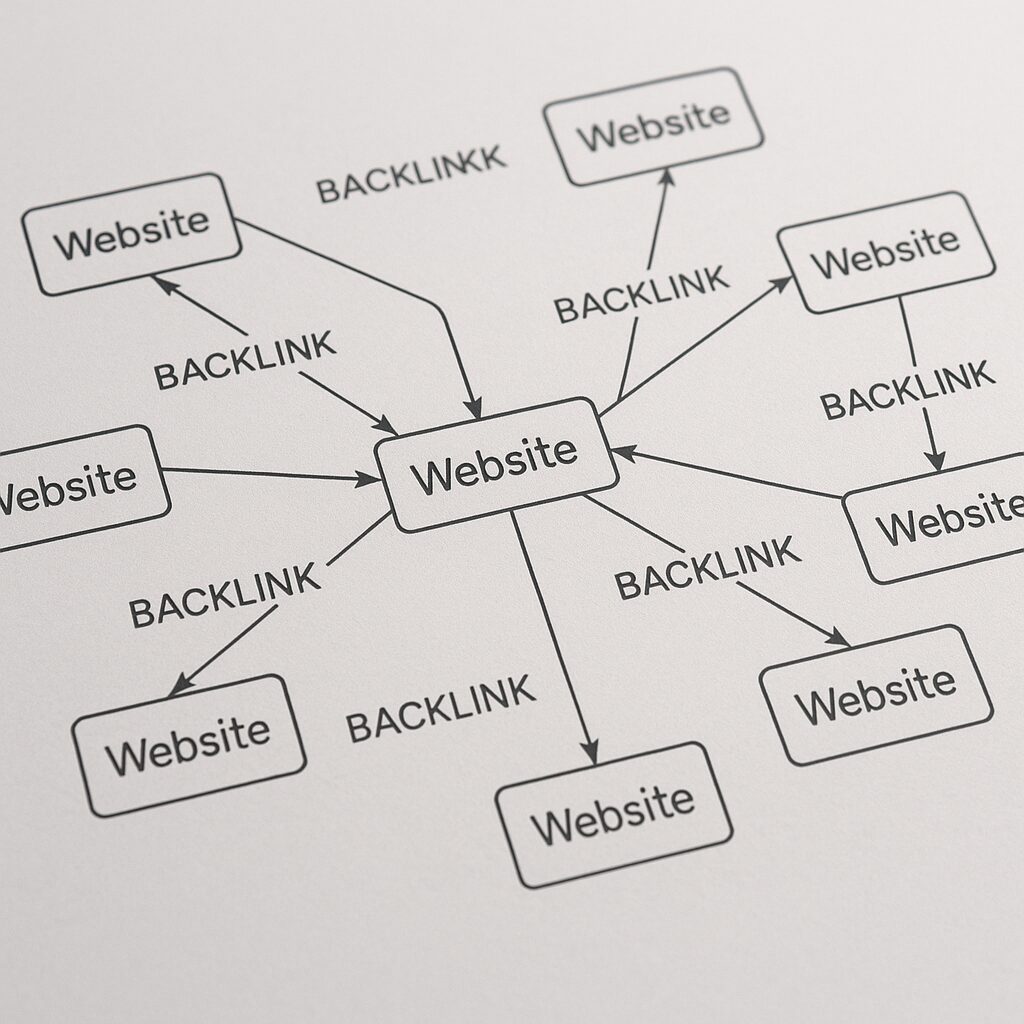
Obtaining quality backlinks relies on a methodical approach: understanding your targets, offering unique content, and using the right tools to monitor results. This guide details each step, from defining objectives to adjusting your strategy, to help you build a strong and sustainable link profile.
Somaire
1. Why netlinking changes the game
Netlinking plays a central role in search engine algorithms. Incoming links represent a form of external validation: when a reputable site points to yours, you gain authority and visibility. A dense backlink profile, but above all a quality one, sends a strong signal to indexing robots. The impact translates into better ranking and more targeted traffic.
Imagine your site as a station in a railway network: each connection (backlink) attracts passengers (internet users) and strengthens your importance in the overall network. Without these connections, you remain isolated, even if your content is relevant.
2. Laying the foundations of your netlinking strategy
2.1. Define your objectives
Before any action, list what you want to achieve: a rise in power on specific keywords, a sectoral audience, or notoriety among influencers. Without clear benchmarks, every new link becomes a gamble. A quantified target (for example 20 quality links in three months) allows you to steer your efforts and measure the effectiveness of each campaign.
2.2. Target the right sites
A backlink from a high-authority domain is often worth more than ten links from low-traffic sites. Aim for blogs in your sector, specialized media, and thematic portals. Check the Trust Flow of each prospect: a high score generally corresponds to a loyal audience and a good reputation. To refine this work, you can compare platforms like eReferer vs Linkuma and decide which best meets your analysis needs.
3. Proven techniques to get backlinks
Several methods remain essential, especially for beginners. Each approach has its specifics; the idea is not to implement everything simultaneously, but to choose those that fit your style and sector.
3.1. Guest Blogging
Writing a guest article on an influential site has two advantages: demonstrating your expertise and attracting a new readership. Select blogs whose audience matches your target and propose a topic that is distinct enough to bring real added value. For example, an original tutorial or a concrete case study captures attention more effectively than a generalist article.
- Identify themes that are missing on the host blog.
- Propose an original angle based on your internal data or your feedback.
- Include a link to a key resource on your site (tool, guide, infographic).
3.2. Creation of Free Resources and Tools
Infographics, interactive questionnaires, or online calculators naturally generate shares and backlinks. Imagine you put online a marketing ROI simulator: any company that uses it can cite it as a reference. These high perceived value contents often generate spontaneous links.
3.3. Partnerships and Co-marketing
Collaborating with another brand or an influencer can lead to exchanges of visibility and links. A joint webinar, a co-authored white paper, or even a cross contest unite both audiences. The key remains coherence: your partner must operate in a field complementary to yours and share similar values.
3.4. Recovery of Unlinked Mentions
Monitor your brand name or your flagship content on the web. When an author mentions your work without adding a link, a friendly follow-up can be enough to turn the mention into a backlink. Alert tools or monitoring services facilitate this task.
4. Essential Tools to Manage Your Link Building
Without a tracking solution, you are navigating blindly. This table lists three essential tools and compares their key features.
| Tool | Link Profile Analysis | Ranking Tracking | Mention Alerts | Indicative Price |
|---|---|---|---|---|
| Majestic SEO | Trust Flow, Citation Flow | – | No | From €50/month |
| eReferer | Popularity Score | Yes | Yes | Free – Premium |
| Linkuma | Quality Index | Yes | Yes | From €29/month |
5. Monitor, Evaluate and Adjust Your Efforts
Each backlink must be monitored over time. Note its acquisition date, the target page, and the source domain. Observe the evolution of your ranking and organic traffic on the concerned pages. If a link generates little traffic or does not bring SEO gain after several weeks, question its relevance and diversify your channels.
“Link building is not a sprint, it is a marathon where perseverance outweighs the accumulation of links” – anonymous SEO specialist.
6. Common Pitfalls to Avoid
- Favoring quantity: hundreds of low-quality links risk penalizing your site.
- Buying link packages on web farms.
- Failing to adapt your message to the tone of the host site.
- Neglecting the human relationship: a simple polite follow-up often works better than a generic email.
7. Best Practices to Sustain Your Link Profile
Quality is cultivated. Regularly update your flagship content to maintain the interest of referring sites. Respond to comments, thank your partners, and offer exclusive updates. An active link network relies on exchange and mutual trust.
FAQ
What is a quality backlink?
A link from a high-authority site, thematically related and generating relevant traffic to your content.
How many backlinks should I aim for per month?
It depends on your industry, but to start, 5 to 10 targeted links per month is a good pace.
Is guest blogging still effective?
Yes, as long as you bring a unique perspective and choose respected blogs in your niche.
How to avoid Google penalties?
Avoid excessive link exchanges, artificial traffic, and links on sites unrelated to your activity.
Which tool to detect unlinked mentions?
Monitoring services like Mention or Awario scan the web and alert you as soon as a keyword appears.