
| Key Points | Details to Remember |
|---|---|
| 🔍 Definition | Trust Flow measures the reliability of links, Citation Flow evaluates their quantity. |
| ⚖️ Comparison | Trust Flow weighs the **quality**, Citation Flow emphasizes **popularity**. |
| 📊 Scale | Both scores range from 0 to 100 according to the **Majestic algorithm**. |
| 🎯 SEO Goals | Trust Flow aims to strengthen **credibility**, Citation Flow to increase **visibility**. |
| 🛠️ Tools | Tracking via Majestic SEO and backlink audits. |
| 🚀 Applications | Optimize your link profile for better **organic ranking**. |
When you are interested in SEO, you inevitably come across two major indicators: Trust Flow and Citation Flow. The first scrutinizes the quality of incoming links, the second counts their volume. But before deciding which to prioritize, it is better to understand their specificities, their strengths, their limits… and adjust them to your ambitions. A well-calibrated campaign often relies on a nuanced strategy, halfway between quality and quantity.
Somaire
Understanding Trust Flow and Citation Flow
These metrics were born at Majestic, a historic player in backlink tracking. Despite their proximity, they do not express the same thing. Ensuring dominance on Google is not just about accumulating links, it is also about gaining the trust of reputable sites.
Origin and calculation of Citation Flow
Citation Flow relies on an algorithm that assigns a score based on the number of backlinks pointing to a page or domain. Each link “votes” for you, whether it comes from an amateur blog or an institutional site. In practice, it is noticed that the more links you get, the faster the score rises. However, this model does not distinguish the credibility of the source. A simple link in a suspicious directory can influence the value of Citation Flow.
Origin and calculation of Trust Flow
At the same time, Trust Flow refines this logic by evaluating the proximity of links to a set of “seed” sites deemed reliable by Majestic. Each backlink inherits a share of this trust, which then spreads to your domain. Result: a link from a recognized site (university, institutional, reference media) weighs much more than a link from a forum or directory. Here, the algorithm integrates a qualitative dimension and does not grant blind credit.
Why These Metrics Matter for Your SEO
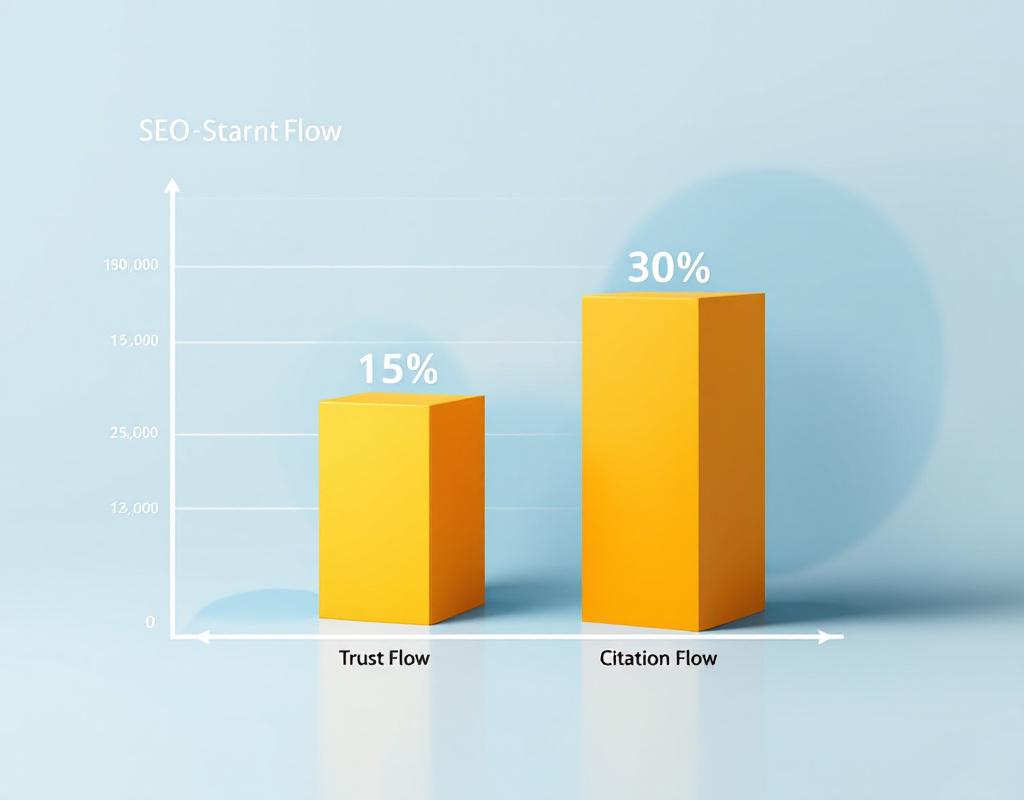
Google does not reveal its secrets, but field experience shows that a good balance between trust and popularity facilitates climbing the SERPs. While Citation Flow sends a strong signal about overall notoriety, Trust Flow helps detect opportunities for quality links.
Focusing solely on quantity can lead to a toxic backlink profile. Conversely, aiming only for very high-quality links without maintaining a steady flow of new links can slow down the SEO effect. The ideal? Visualize these two dimensions in your dashboard and identify areas to reinforce.
Trust Flow vs Citation Flow: Points of Comparison
Authority vs Popularity
If we had to illustrate, Trust Flow resembles a reputation test: “Do people trust you?”. Citation Flow, on the other hand, answers the question: “How many votes do you receive?”. One focuses on depth, the other on breadth. A purely quantitative strategy offers faster growth, but it can collapse in case of algorithm updates or penalties.
Link Quality vs Quantity
A single link from a very high-authority site can move your Trust Flow score by several points. Meanwhile, dozens of links from directories or link farms will mostly inflate your Citation Flow without improving the perceived image of your domain. In fact, to build a solid profile, one often combines a small handful of “premium” links with a steady flow of more modest but diversified links.
How to Prioritize These Indicators According to Your Goals
It all depends on your SEO projects:
- Reviving an old site, hungry for trust: focus on Trust Flow, with importing hard-to-get links.
- Launching a blog or e-commerce: visibility boosts through partnerships, guest posts, and quality directories will enhance Citation Flow in the medium term.
- Local optimization: a controlled mix of citations from relevant directories and specialized press articles will balance your two scores.
This approach is long-term. It is not about changing everything at once but gradually steering your link-building actions towards the dimension you lack the most.
Tools and Methods to Track These Metrics
Majestic remains the reference for measuring Trust Flow and Citation Flow. Its interface offers backlink profile reports, flow maps, and even domain comparisons. To automate monitoring, you can set alerts when your scores drop below a critical threshold or cross a milestone.
To deepen your link-building, do not hesitate to consult the dedicated guide to best practices of Majestic SEO. It details how to leverage its features to detect link opportunities, filter toxic sources, and maximize the impact of each backlink.
Strategies to Improve Your Trust Flow and Citation Flow
Some concrete levers:
- Develop content partnerships with high-authority sites. Even a mention in an interview or testimonial adds credibility to your profile.
- Create “evergreen” content likely to naturally attract links: case studies, infographics, practical guides.
- Organize digital press relations campaigns to reach specialized media and obtain quality links.
- Analyze your competitors’ backlinks to identify potential link sources and plan outreach campaigns.
- Regularly prune suspicious links via Search Console and the disavow file to maintain a healthy profile.
Practical Cases and Feedback
On an e-commerce site, a 10-point improvement in Trust Flow over three months led to a 15% increase in organic traffic on competitive queries. Conversely, a B2B blog that focused solely on Citation Flow saw its score rise, but without real progress on value-added keywords.
These examples show that it is not enough to aim for a raw number: it is the balance between trust and quantity that produces a real leverage effect.
FAQ
What is Trust Flow?
It is an indicator that measures the quality and reliability of incoming links based on a set of reference sites selected by Majestic.
What is Citation Flow?
It evaluates the quantity of backlinks to a domain or URL, without distinguishing the source or the reputation of the originating site.
Which one is more important for SEO?
It all depends on your priorities: to establish your credibility, focus on Trust Flow; to broaden your overall visibility, focus on Citation Flow. The ideal remains a relevant balance.
How can I improve my Trust Flow?
Aim for links from recognized sites (media, universities, institutions), create very high-quality content, and nurture your content partnerships.
{
“@context”: “https://schema.org”,
“@type”: “Article”,
“headline”: “Trust Flow vs Citation Flow: Which Indicator to Prioritize to Boost Your SEO?”,
“description”: “Understand the differences between Trust Flow and Citation Flow, choose the right indicator according to your SEO goals, and discover strategies to balance quality and quantity of links.”,
“keywords”: [“Trust Flow”, “Citation Flow”, “SEO”, “link building”, “Majestic SEO”],
“mainEntity”: {
“@type”: “FAQPage”,
“mainEntity”: [
{
“@type”: “Question”,
“name”: “What is Trust Flow?”,
“acceptedAnswer”: {
“@type”: “Answer”,
“text”: “It is an indicator that measures the quality and reliability of incoming links based on a set of reference sites selected by Majestic.”
}
},
{
“@type”: “Question”,
“name”: “What is Citation Flow?”,
“acceptedAnswer”: {
“@type”: “Answer”,
“text”: “It evaluates the quantity of backlinks to a domain or URL, without distinguishing the source or the reputation of the originating site.”
}
},
{
“@type”: “Question”,
“name”: “Which one is more important for SEO?”,
“acceptedAnswer”: {
“@type”: “Answer”,
“text”: “It all depends on your priorities: to establish your credibility, focus on Trust Flow; to broaden your overall visibility, focus on Citation Flow. The ideal remains a relevant balance.”
}
},
{
“@type”: “Question”,
“name”: “How can I improve my Trust Flow?”,
“acceptedAnswer”: {
“@type”: “Answer”,
“text”: “Aim for links from recognized sites (media, universities, institutions), create very high-quality content, and nurture your content partnerships.”
}
}
]
}
}
{
“@context”: “https://schema.org”,
“@type”: “WebPage”,
“about”: {
“@type”: “Thing”,
“name”: “Trust Flow Citation Flow SEO Comparison”
},
“keywords”: [“Trust Flow”, “Citation Flow”, “SEO”, “netlinking”, “Majestic SEO”]
}