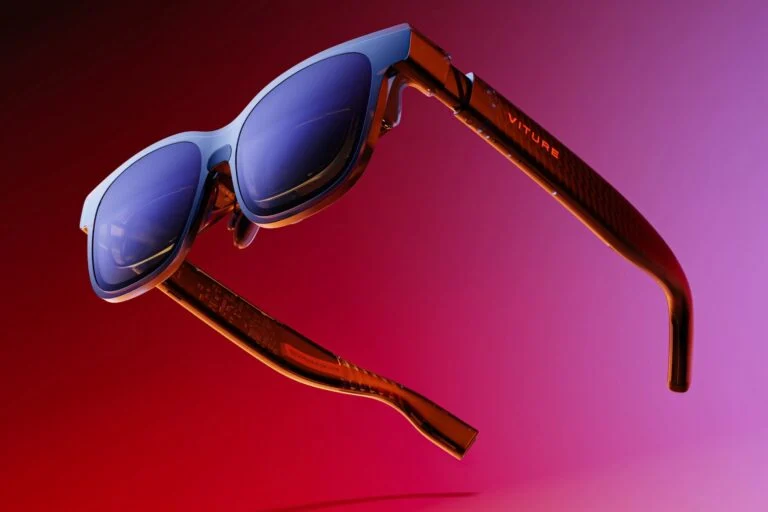
TL;DR: Luma Pro offers a virtual screen of 152″ with a 52° FOV, a 1200p rendering at 120 Hz, up to 1000 nits perceived brightness, two frame sizes, myopia adjustment up to −4D, and electrochromic film lenses. The SpaceWalker app provides 3DoF, multi-screen, and 2D→3D in real time. At $499, it is a safe bet compared to the Rokid Max 2 and XREAL One/One Pro if you prioritize image clarity and comfort. a safe bet compared to the Rokid Max 2 and XREAL One/One Pro if you prioritize image clarity and comfort.
Somaire
Technical Specifications (Summary)
- Display: micro-OLED, up to 1200p, 120 Hz, ~108% sRGB
- FOV: 52° • Virtual screen ≈ 152″ at 3 m
- Brightness: up to 1000 nits (9 levels)
- Myopia: up to −4.0D
- Sizes/IPD: Regular 64±6 mm | Large 68±6 mm
- Audio: HARMAN, spatial
- Dimming: electrochromic film 0.5–40%
- Weight: 79–81 g
- Connections: USB-C (DP Alt Mode), magnetic
- Software: SpaceWalker (3DoF, multi-screen, 2D→3D)
- US Price: 499 USD
Notes: values from the official website, subject to change.
Key Points
Two frame sizes (+ nose pads) to better cover the IPD; 120 Hz and high brightness for movies/games even in bright environments; fast dimming for isolation on the go.
Design & Comfort
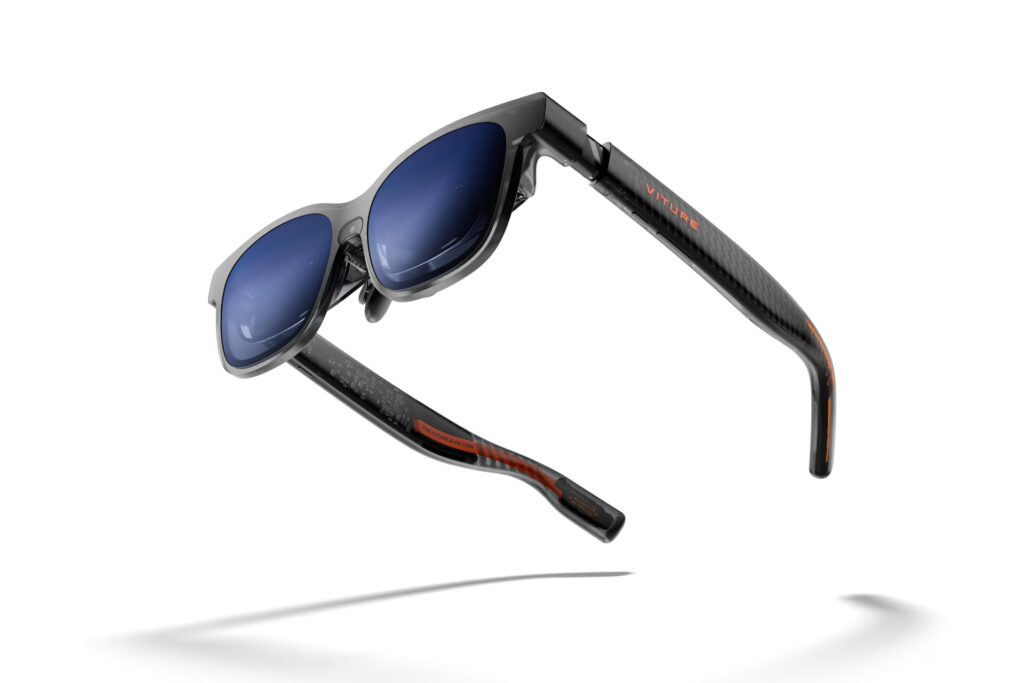
Translucent frame (two sizes) with 3 nose pads and hair-friendly cover. The balance between temples and weight limits pressure; the −4D adjustment covers most mild myopias.
Image & Optics
Virtual screen up to 152″, 52° FOV, 120 Hz and 1200p “4K-like” rendering. Brightness 1000 nits and electrochromic film (0.5–40%) for quick immersion.
Sound
HARMAN speakers with spatialization: sufficient for movies/games without headphones.
XR Features (SpaceWalker)
3DoF (stabilization), multi-screen, ultra-wide, 2D→3D in real time. Apps: iOS/Android/Windows/macOS.
Compatibility & Uses
USB-C DP Alt Mode: USB-C smartphones, PC/Mac, handheld consoles (Steam Deck, ROG Ally…). No built-in battery.
Use cases: mobile cinema, cloud/console gaming, second screen coding/SSH, mobile productivity (DeX/Ready For).

Price & availability
US retail price: 499 USD. Availability: subject to stock (pre-order possible).
Quick comparison
VITURE Luma Pro
52° FOV up to 1000 nits 1200p • 120 Hz −4D Weight 79–81 g Ecosystem SpaceWalker (3DoF, multi-screen, 2D→3D) US Price 499 $ EU Price — (USD, VAT/shipping at checkout)
Rokid Max 2
≈ 50° FOV ≈ 600 nits 1080p • 120 Hz −6D Weight ≈ 75 g Ecosystem Station 2 (Android TV) US Price 429 $ EU Price ≈ 579–729 € (observed)
XREAL One Pro
57° FOV ≈ 700 nits 1080p • 120 Hz IPD: 2 sizes Weight ≈ 87 g Ecosystem Nebula / Beam / Beam Pro US Price — EU Price 689 € (EU store)
Quick take: for brightness, clarity, and two sizes, Luma Pro is the best versatile bet. XREAL One Pro keeps the FOV/beam ecosystem advantage. Rokid Max 2: budget/−6D.
Limitations & points of caution
- No built-in battery: depends on the source.
- IPD & myopia: −4D and two sizes cover many users, but not all.
- 3DoF/multi-screens: performance varies depending on the host device.
Verdict
At $499, VITURE Luma Pro ticks the essentials: bright and sharp image, 120 Hz, comfort (two sizes), useful XR features via SpaceWalker — a convincing daily driver.
FAQ
iPhone compatibility?
Yes via USB-C (iPhone 15/16) and SpaceWalker iOS app. Lightning iPhones require a dedicated pack/adapter. Steam Deck / ROG Ally?
Yes, direct USB-C connection; very suitable for portable gaming. Glasses wearers?
3 nose pads, two sizes, built-in −4D. For strong prescriptions: inserts or lenses.
SEO block
- Title: VITURE Luma Pro: test & review of XR glasses (120 Hz, 1000 nits, 52°)
- Meta description: Our review of the VITURE Luma Pro: 1200p/120 Hz, 1000 nits, 52° FOV, −4D, electrochromic, SpaceWalker (3DoF, multi-screen, 2D→3D). Responsive comparison.
- Slug: viture-luma-pro-test-review
Sources
- VITURE Luma Pro — product page (specs, US price $499).
- Rokid Max 2 — global store (price US $429), datasheet.
- XREAL One Pro — EU store (price €689), FOV 57°.
Last updated: 2025-08-06 — top of page